
If your practice isn’t growing, you’re working on the wrong stuff

By Jill Woods | Healthcare Marketing Specialist | Practice Momentum
In this post:
- Why your practice can stay stuck even when you’re doing “all the right things”
- How your thoughts and focus are shaping your behaviour and results every day
- Why changing your environment doesn’t always change anything
- The hidden pattern that keeps pulling you back to the same place
- A simple, practical way to start shifting things so you create different results
Upfront honesty: I use AI to help me research and write my blog posts. I'm not going to pretend (like many) that I don't. It saves me time and means I can create more detailed, well-referenced content in much less time than my dyslexic brain on it's own would allow me to do. The result? I believe higher quality content delivered more efficiently - I hope you agree 👍🏼
Putting the effort in but still feeling stuck?
This is why
There is a lot written about this topic, and most of it falls into one of two camps. It either feels very academic and hard to follow, or it swings the other way and becomes so fluffy that it’s not much use to anyone.
So in this blog, I’m going to try and meet you somewhere in the middle.
I’m going to use what I call my “dyslexic logic” to simplify what can be quite a complex subject, without turning it into a throwaway “just think positive” message that doesn’t actually help you change anything.
Because there is a way of understanding this that is both practical and useful, especially when it comes to your practice.
If your practice hasn’t grown in the way you hoped it would over the last 6 to 12 months, there’s a very good chance that not a lot about you and who you are as a person has changed either. This is not meant as a dig, because I know how busy you are and how much you are already doing, but it is something worth really thinking about.
Most practice owners are not short of effort. They are posting more, trying new ideas, tweaking their website, maybe even investing in support or learning new tools, and helping more and more patients. From the outside, it looks like progress is happening.
But being busy and growing as a person (which you have to do if you want different results) are not the same thing.
You can change what you do without changing what you believe and how you think, and if your thinking stays the same, your results tend to follow suit. That’s when things start to feel frustrating, because you are putting the effort in, but not seeing the shift you expect or want.

. . . they drive your state of being
This is the bit that often gets dismissed as fluffy, so I'm going to keep it simple and grounded.
When you think a thought, your brain triggers an emotional response through parts of the limbic system, including the Amygdala. That emotional response then creates a chemical reaction in your body - a feeling.
So if you are thinking about something stressful or frustrating, your body produces stress-related chemicals like cortisol and adrenaline and you "feel" stressed. If you are thinking about something calm, enjoyable, or positive, your body produces a different mix of chemicals such as dopamine and serotonin and you feel calm or relaxed.
This happens quickly, usually within seconds.
So when you tell yourself “it’s just a thought”, it really isn’t. It is your body being given instructions about how to feel and how to respond, and that influences how you show up in the next moment.
This works both ways
Many people only look at the downside of this, such as stress, burnout, and overwhelm, and how that isn't great for our health, and that's understandable.
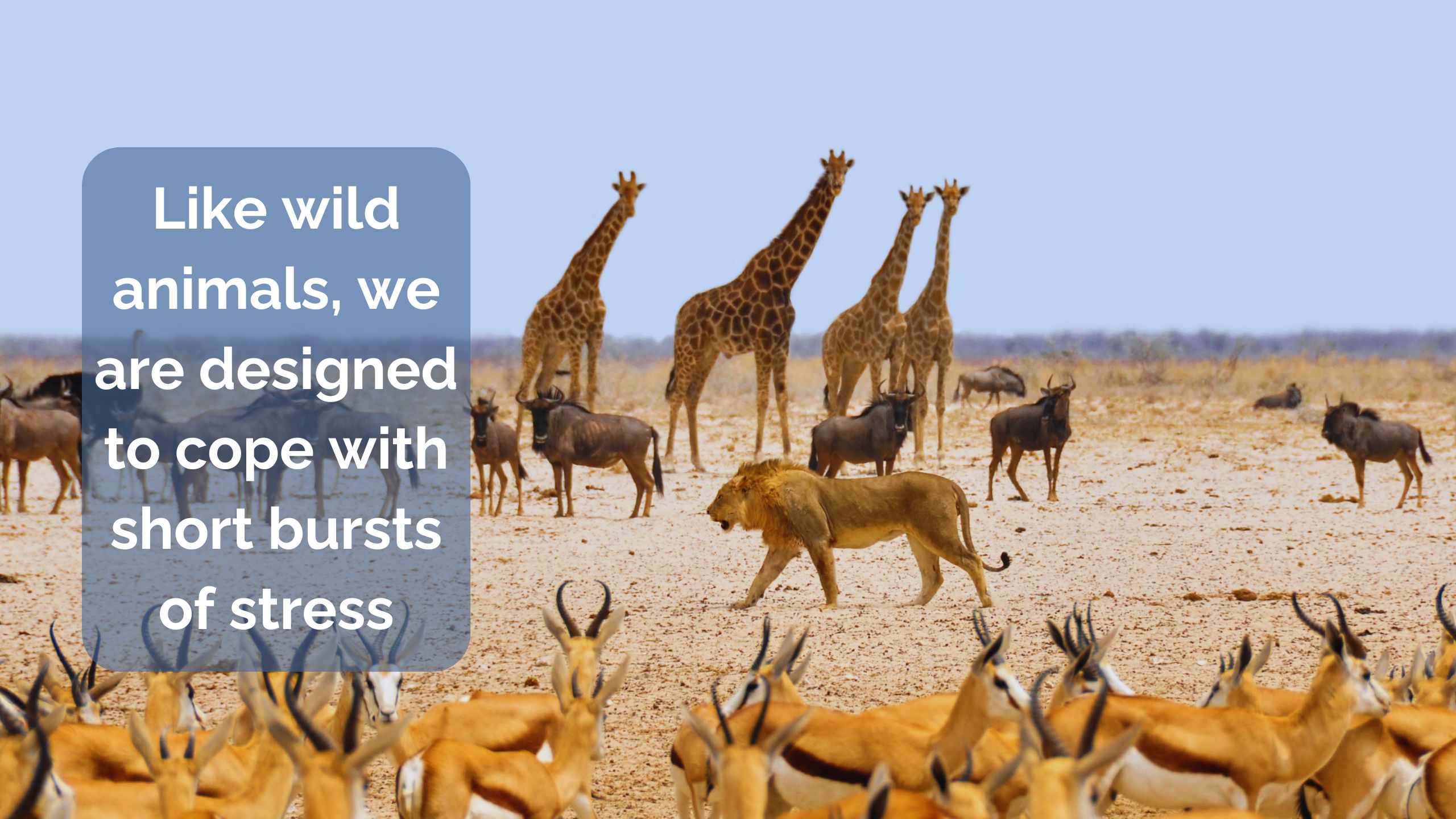
But just like antelope, we are not designed to sit in that state for hours, or days at a time.
When an antelope is chased by a lion it can, in a heightened state of stress, do a pretty good job of running away to evade being eaten. If the chase only lasts a few minutes, it can calm down and get back to eating grass very quickly. If the chase is longer the antelope will need to lie down and rest for a reasonable period to recover.
When you look at the lives many of us are living at the moment, it's very easy to see how we can end up in this longer than desirable state of stress or anxiety. You scroll and find something that annoys you, then you read an email that winds you up, you think about money or time pressure, and then talk about what is not working to a friend who echoes your feelings back to you and then adds in their own current stressed out situation. None of those moments feel huge on their own, but they add up. AND very few of us, unlike the antelope, recognise the need to rest and recuperate before getting back to life. We can often live in this state of stress for days, weeks or months on end with no sign of rest or recuperation in sight.
The more days these things happen back to back, then you create more of a chronic stress response in your body. That kind of ongoing stress has been linked to inflammation, and inflammation is now widely recognised as a contributing factor in a wide range of serious health issues.
But the same mechanism works in your favour as well.
When you are in a more positive, calm, or constructive state, you tend to think more clearly, make better decisions, and respond more effectively to what is in front of you. You then reflect positively on what you have done or achieved or on a more positive experience you have had, and you create a much more positive internal chemistry on an enduring basis.
So this is not about forcing positivity, or saying sickly sweet positive affirmations, it's about recognising that your thoughts which influence your internal state matters and that it is being shaped all day long by what you focus on.
The pattern that keeps repeating (whether you notice it or not)
For most people, this process is not conscious, it runs almost completely on autopilot.
You think in a certain way, which creates a familiar emotional state. That emotional state creates a particular chemical environment in your body, and that chemistry then influences how you behave. The way you behave produces results, and those results reinforce your sense of who you are and what is possible for you.
When you step back and look at it like that, it becomes easier to see why things can feel stuck. Even if you are trying new tactics on the surface, the underlying pattern is still the same.
- Same thinking
- Same chemistry
- Same reactions
- Similar outcomes
It is not surprising that things don't move forward in the way you hoped.
Why changing things around you doesn’t often change anything
This is where a lot of practice owners get caught out, and it can be incredibly frustrating.
You're struggling to make progress so you look to change something. You can invest in a new website, upgrade your clinic, bring in new equipment, expand your team, tighten your systems, or even move into completely new premises. On paper it looks like things have changed.
BUT if you take your old self with you into those new situations, the one with old autopilot limiting beliefs, thoughts, feelings, and actions nothing really changes.
Because you are still being the same person, with the subconscious that is trying to keep you safe, and even if you change your environment or the people around you, without broadening your thinking and getting comfortable with discomfort so you can override your old conditioning, things are unlikely to change.
And that is what keeps you stuck.
Not because you are lazy or incapable, but because part of you is trying to keep things “safe”.
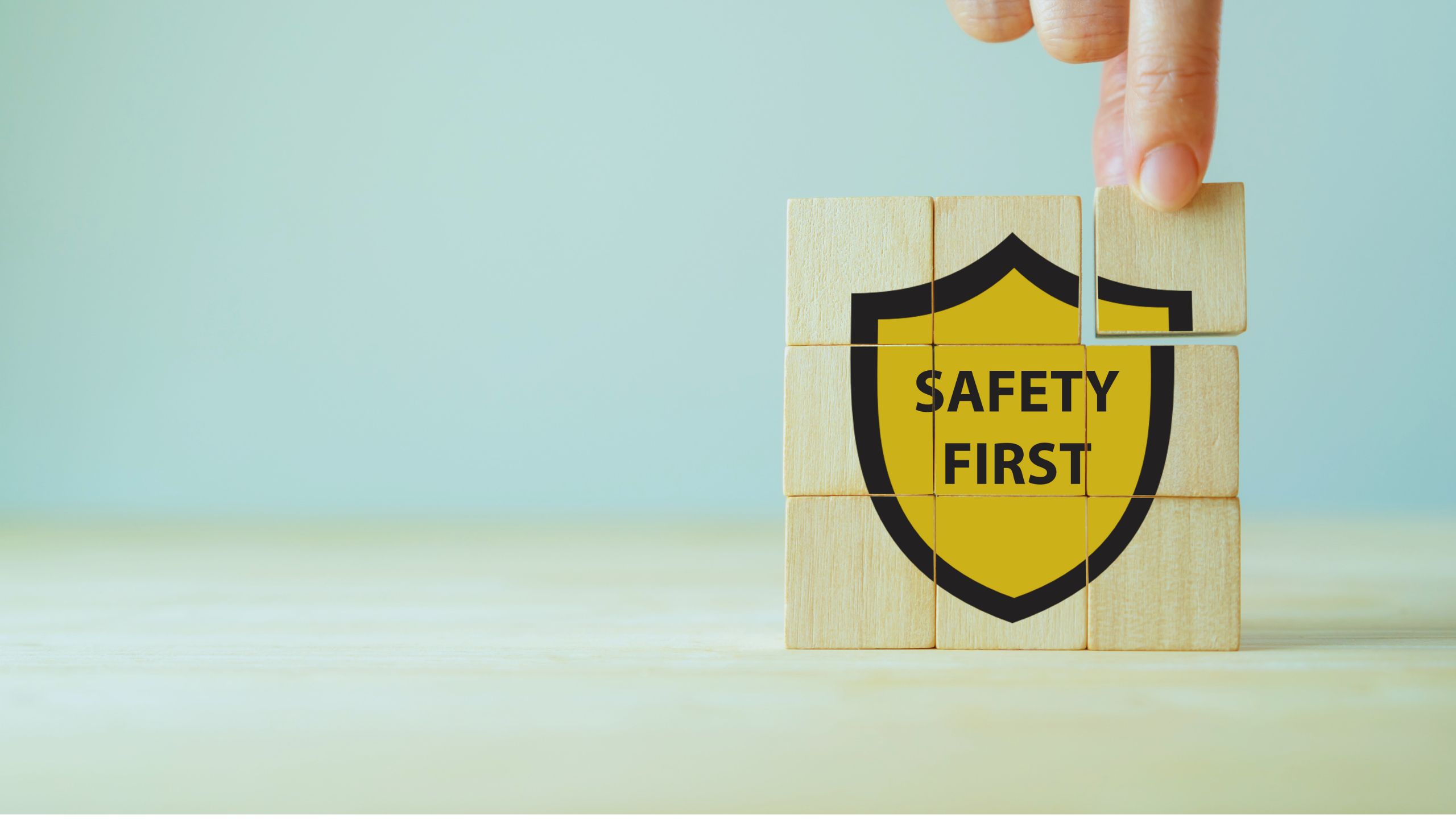
The pull to stay safe (even when it’s holding you back)
This is the bit that can feel a bit counterintuitive.
That pull to stay where you are, even when you know you want something different, is not a flaw, it's your subconscious programming trying to protect you.
Work by people like Joe Dispenza and Bruce Lipton explores how familiar emotional states become your default, and how your body can start to associate those states with safety, even if they are not particularly helpful. The irony here is that your "comfort zone" isn't actually that comfortable.
So when you start to move outside of that, whether that is raising your prices, showing up more visibly, changing your positioning, or stepping into a more confident version of yourself, it can feel uncomfortable.
And your subconscious instinct is to pull back, and you'll know exactly when this happens because you'll find yourself, procrastinating or self sabotaging. Making excuses for why you can't do the things you know you need to do to move forward, in absolutely any area of your life - not just in business.
You are hesitating and procrastinating not because it is wrong, but because it is unfamiliar and that new reality is going to feel uncomfortable - because you are fearful of failure, fear of being judged, even fear of success. But be under no illusion - you are hesitating doing what you instinctively know you need to do for things to change, because of those fears, no matter how much you say you want that new experience or outcome.
So where does change actually start?
I promised I'd keep this simple so here you go.
Changing your situation by upgrading your actions starts with your attention - energy flows where your attention goes.
Nothing has to change externally for your internal experience to change, all that has to change is where your attention is, and this is something you can test for yourself.

I noticed this the other day walking through an underpass on my early morning walk to work. It was dark and a bit foreboding, possibly even a bit scary or sinister, and if I focused on that, it felt exactly as you would expect. But at the end of the tunnel there was beautiful morning sunlight hitting a playground with some pretty coloured birds pecking at the ground by the play equipment. The moment I shifted my attention towards that, my experience changed. I saw pretty birds, bright cheerful sunlight, the cheeping of the birds, the bright colours of the play equipment, and could almost hear the laughter of the children, even though there were no children there at that time of day. Very quickly it made me feel brighter and lighter and happier.
Same exact place.
Same exact moment in time.
BUT two very different feelings and two very different experiences of the exact same situation - all that changed was where I put my attention.
I saw this every day when we were living in Colombo in Sri Lanka. On one side of the path where I did my walk to work most mornings there was traffic, noise, and fumes. On the other side there was a park, green space, beautiful old trees, and calm. My situation didn't change - I was still walking on the same path that lay between the road and the park, but my experience of it depended entirely on where I chose to focus.
Some days I focused on the chaos, and being there felt harder. Other days I focused on the trees, the light, even the feeling of the warm rain on my skin, and the whole experience felt much more pleasant.
You will have seen this yourself in smaller moments. You read an email that makes your stomach drop, but if you pause and look up at something calm or pleasant, even briefly, your state begins to shift.
Nothing external has changed. Your attention has and as a consequence your internal state has.
You can’t control everything, but you can control this
You cannot control what lands in your inbox, what is happening in the wider world, or how other people behave. But you can control where your attention goes in relation to many things.
And that matters more than most people realise, because your attention influences your thoughts, your thoughts influence your chemistry, and your chemistry influences how you behave.
That is a chain reaction that runs all day long, whether you are aware of it or not.
Modern life is making this harder than it needs to be
I think at this point it's also worth being honest about the environment we are operating in. We are surrounded by addictive online content that is mostly negative in it's messages.
If you spend half an hour consuming news or social media content that is overwhelmingly negative, which let's face it is hard not to do - and that has an impact. It is not neutral input, it is feeding your system with information that is likely to trigger a stress response.
If that becomes your default, you can end up spending a large portion of your day in that state without really noticing it. Over time, that becomes your baseline, and that baseline influences how you think, how you feel, and how you show up, and before you know it you are in a state of chronic stress. A state your body was not designed to tolerate for very long.
So what do you actually do with this?
This is where I want to bring it back to something practical, a way to create change.
Hopefully you get that the first step is awareness. You need to start noticing where your attention is going throughout the day. What are you focusing on most of the time? What conversations are you having, both out loud and in your own head?
Once you notice it, you have an opportunity to create change.
You can carry on as you were, or you can deliberately shift your attention somewhere else.
That does not mean ignoring problems or pretending everything is perfect. It simply means asking yourself a slightly better question in that moment.
What else could I focus on right now that would be better for me and put me in a better state?
That might be something in your environment, something that is working, or an example of another practice or business that is doing well. When you start actively looking for evidence of more positive things like what is possible, you begin to see more of it, and that gradually starts to influence what you believe and how you act.
How this starts to change things over time
You do not need to be brilliant at this all the time. You won’t be - to start with.
But each time you notice your focus and choose to shift it, you are interrupting that old pattern. At first, it might feel small and insignificant, but repeated over time, those small shifts start to add up.
Instead of going round in the same loop, you begin to move forward. A slightly more resourceful, more proactive version of you starts to show up more often, and that version of you will naturally make different decisions and take different actions.
Those different actions lead to different results, and that is where the real change starts to happen.
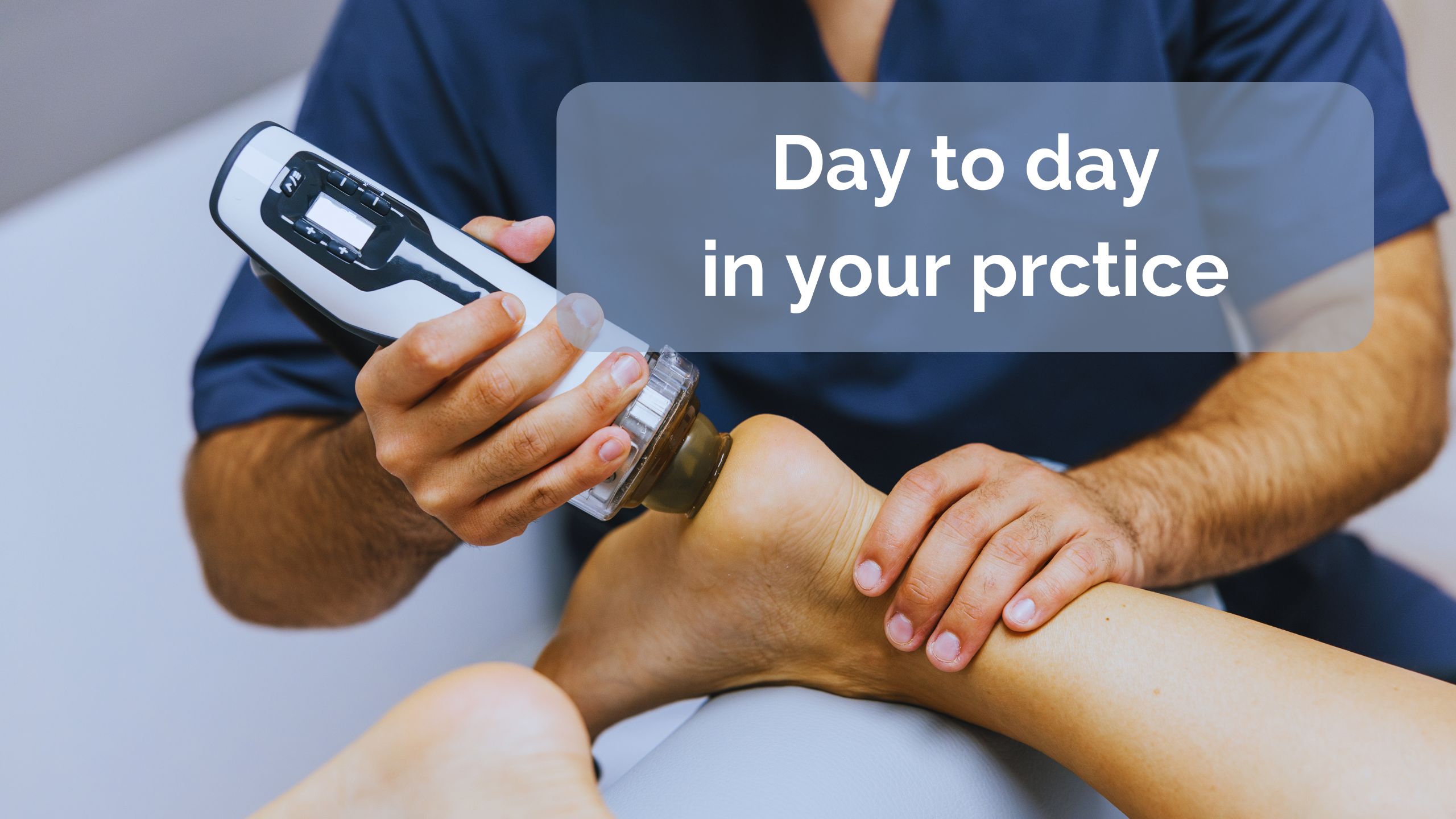
Bringing it back to your practice
Your practice is not just shaped by your location, your marketing, your pricing, your systems, or the tools you are using. All of those things matter, of course they do, but they are not the full picture.
Your practice is also shaped by how you think, how you respond to those thoughts, and how you show up on a daily basis. That shows up in the decisions you make, the conversations you have, the opportunities you notice, and the ones you miss.
If your attention is consistently on what is not working, what is not happening, or what feels difficult, you will keep reinforcing that experience. You will notice more problems, feel more frustration, and make decisions from that place. Over time, that becomes your normal way of operating, and it quietly influences everything from how you communicate with patients to how confidently you promote your services.
On the flip side, if you begin to shift your attention at work, even slightly, towards what is going well, what is possible, and what you are moving towards, something different starts to happen. You'll begin to feel a bit more in control, a bit more optimistic, and a bit more open to taking action.
And that is where the real shift in your practice will happen.
Because from that state, you are far more likely to:
- follow through on ideas rather than overthink them
- have more constructive conversations with your team and your patients
- spot opportunities you would have previously overlooked
- and take actions that actually move things forward
It is not about ignoring challenges or pretending everything is perfect. It's about recognising that the state you are in when you approach those challenges will influence what you do next.
So when you are thinking about growing your practice, it is worth asking yourself not just 'what do I need to do differently?', but also 'who do I need to become while I’m doing it?
Because that is what ultimately changes the outcome.
A final thought
You are not just reacting to your life as it happens.
In many ways, you are reinforcing it through the patterns of thought and attention you return to each day.
The encouraging part of that is that it also means you have more influence than you might think. By becoming aware of where your attention is going and making small, deliberate shifts, you begin to change how you feel, how you act, and ultimately what results you create 🎉.
Influences and further reading
My thinking on this subject, and the ideas I am trying to convey in this post, have been heavily influenced by the work of a number of people who have explored the connection between thoughts, biology, behaviour, and results in far more depth than I ever could in a single blog.
If this has resonated with you, then these are well worth a look:
Joe Dispenza
Joe Dispenza explores how thoughts and emotions influence the brain and body, particularly through his work on meditation, neuroplasticity, behavioural change, and life experiences. His research and teachings focus on how people can consciously shift their internal state to create different outcomes.
You can find out more about his work on his website here.
Bruce Lipton
Bruce Lipton is known for his work in epigenetics, looking at how our beliefs and environment can influence gene expression. His work challenges the idea that biology is fixed and instead highlights how perception and mindset play a role in our physical health.
You can find out more about his work here on his website.
HeartMath Institute
The HeartMath Institute researches the connection between emotional states, heart function, and cognitive performance. Their work looks at how coherence between the heart and brain can influence focus, resilience, and overall wellbeing. Their website contains a wealth of related information.
Lynne McTaggart
Lynne McTaggart is known for her “Intention Experiments”, which explore how focused thought and group intention may influence physical outcomes. Her work sits at the intersection of science, consciousness, and human potential. You can find out a lot more about Lynne's work here on her website.
Gregg Braden
Gregg Braden brings together ideas from science, spirituality, and ancient traditions to explore how thoughts, emotions, and human perception may influence reality and decision-making. You can explore his work here on his website.
Mel Robbins
Mel Robbins takes many of these ideas and makes them practical and accessible, focusing on how small changes in thinking and behaviour can lead to meaningful shifts in confidence, action, and results. You'll find so many great resources on her website.
David Bayer
David Bayer’s work focuses on identity, beliefs, and the internal patterns that drive behaviour. His central message is that lasting change comes from shifting what you believe about yourself, not just what you do. I'd also highly recommend his book - A Changed Mind.
Find out more about his work here on his website.
I’d be so grateful if you could spare me just another 5 minutes to share your thoughts or questions in the box at the end of this page. What are you going to do differently now in your private practice?
Oh, and please use the social share buttons if you think other people you know might benefit from seeing this.
Until next time.
Thank you
Jill Woods
Healthcare Marketing Specialist
Founder of Practice Momentum
Jill Woods
Healthcare Marketing Specialist | Founder, Practice Momentum | Author of ELEVATE
I started Practice Momentum in 2010 after watching too many brilliant clinicians quietly burning out — not because they were bad at their jobs, but because nobody had ever taught them how to run or market a small business. Since then, I've helped hundreds of tiny practice owners around the world build practices that are professionally exciting, personally fulfilling, and financially rewarding. I'm the author of ELEVATE: Mindset, Marketing and Happiness Strategies for Allied Health Practice Owners, a podiatrist turned healthcare marketing specialist, a speaker, a nomadic military wife, and a self-confessed happiness junky. I believe tiny practices have the power to change healthcare globally - and I'm on a mission to help as many of them as possible thrive.
