
The Best Mentors I've Ever Had (Who don't know I exist)
By Jill Woods | Healthcare Marketing Specialist | Practice Momentum
In this post:
- Why you don't need to be in a paid programme to start moving forward
- The one thing you genuinely can't do on your own, no matter how determined you are
- How to build yourself a bench of world-class mentors, for free, starting today
- The two areas every tiny practice owner needs mentoring in
- A little trick I use to keep the right voices from getting lost in the noise
Upfront honesty: I use AI to help me research and write my blog posts and I'm not going to pretend otherwise. It saves me time, helps me find and reference evidence I might otherwise have missed, and means my dyslexic brain can produce more detailed, well structured content far more efficiently than it could alone. The result, I hope, is higher quality thinking delivered more consistently. I'll let you be the judge. 👍🏼
Some of the most important mentors in my working life have never met me. They don't know my name, and they could never pick me out of a line-up. And yet unwittingly they've shaped how I run Practice Momentum, how I think about money, how I show up when I'd rather hide, and how I've learned to bet on myself because no one else can do that for me.
This is what I want to talk about that today, because I think a lot of you are struggling with the same problem, and you don't need to.
If you've read my recent blog You Don't Have to Build an Empire, you'll know I'm a big believer in you being allowed to want what you actually want.
So let me give you another bit of permission today to help you get over some potential FOMO.
You do not need to be in a paid programme, a mastermind, or a fancy accelerator to start moving your practice forward. And I'm saying this as someone who runs all of those things for practice owners. BUT you can absolutely begin exactly where you are, with exactly what you've got, doing it your own way - starting today.
Now, if you are in a good programme, it will almost certainly move you forward faster. After all that's the point of them. Being in the room, having the structure, having steps to follow and someone who knows the way through, and can hold you accountable, all of that shortens the journey, I'm not going to pretend otherwise. So if you have the time and the resources and can find the right person or tribe for you - jump in - it will be worth it - providing you commit to putting in the work.
BUT not being in some form of business coaching programme is NO excuse to stall.
Seth Godin who is one of my mentors, said something in a recent conversation with Mel Robbins (who's also a mentor) that's stuck in my head. He said that the only place to begin is where you are, and that if you're waiting to get somewhere else before you start, you'll never get there.
He's absolutely right, waiting and putting things off is a trap. Just because you're not in the programme yet, don't have the certainty yet, or are feeling low in confidence, doesn't mean you can't start. If you don't start just moving from where you are, you're never going to move.
Here's where I have to be equally straight with you in the other direction.
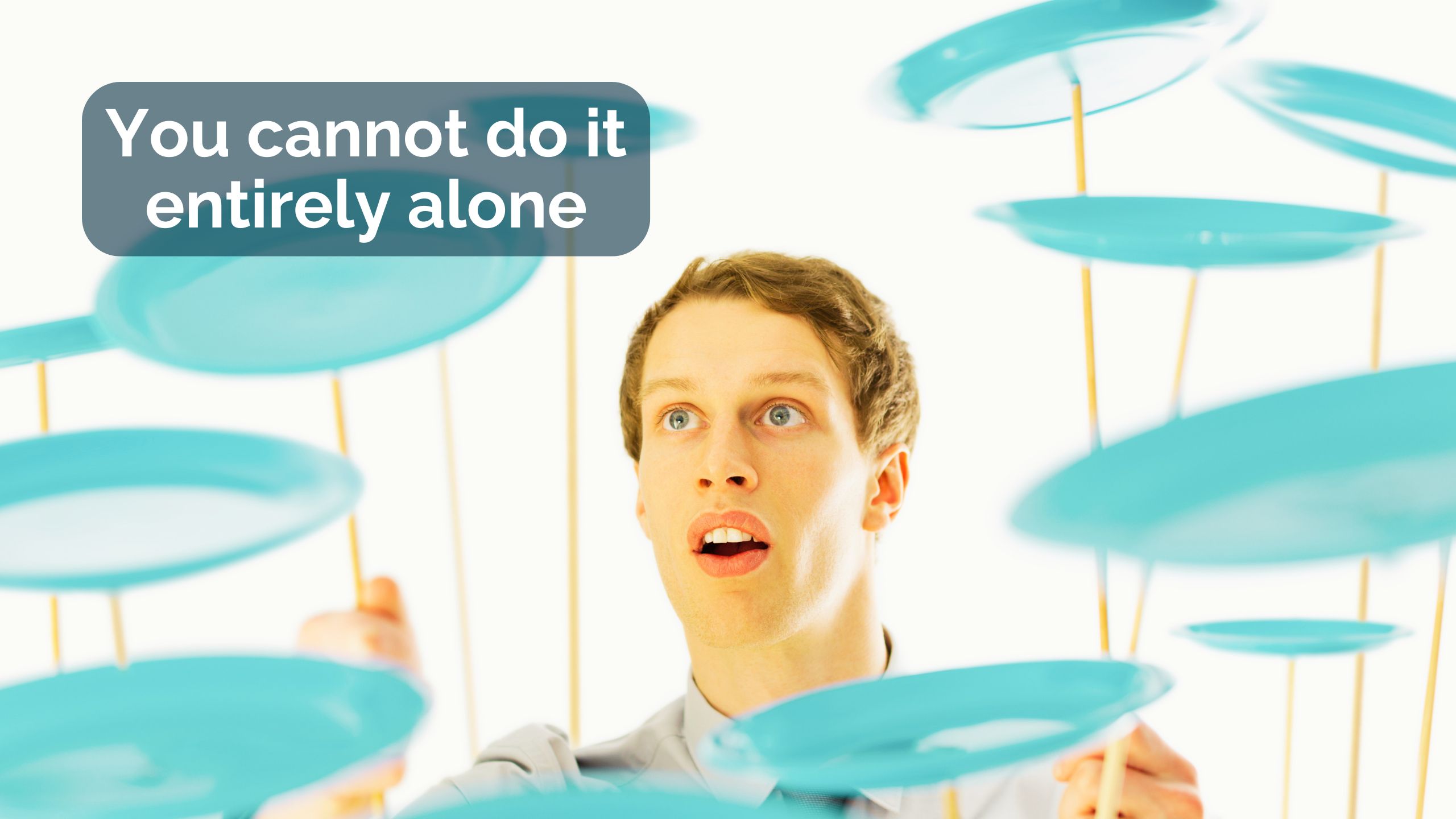
Betting on yourself does not mean doing it all by yourself.
There is a version of "pick yourself" that morphs into stubbornness, where you decide you'll figure everything out on your own, from scratch, in your own little bubble, and it is a slow and lonely way to get almost nowhere. You'll spend three years learning something the hard way that someone could have handed you in an afternoon.
You need help. Every practice owner needs help. You specifically need help from people who already have the kind of expertise you're still busy building. These don't have to be healthcare professionals, or even in your industry. In fact in some ways it's better to look outside your local area and your profession and industry for fresh thinking and fresh eyes on the potential for you and your practice.
So the real position, the honest one, is this. Pick yourself. Bet on yourself. Because right now, for a lot of us, you genuinely are all you've got. That's the reality for thousands of tiny practice owners reading this. Nobody handed you a team, a mentor, or a manual. But do not confuse betting on yourself with going it alone. Those are two completely different things and mixing them up will cost you.
This is the bit I actually wanted to tell you about, because I think it's genuinely useful.
You can build yourself a bench of extraordinary mentors, right now, for free. Not "get help" in some vague inspirational sense. Actual, specific, named people whose thinking you deliberately keep close.
The only qualification a distant mentor has to meet is this: they have to be someone who puts themselves, their ideas, and their ideals out into the world, generously, where you can get at them. Seth is a near-perfect example. He's written thousands of blog posts, most of them free, for years. He shows up and shares his best thinking without waiting to be asked and without demanding anything back. That generosity is precisely what makes it possible for him to mentor me without ever knowing I exist.
And notice something about Seth while we're here. He is not a podiatrist. He is not in allied health. He is not in healthcare at all. Which brings me to something important.
Your mentors do not have to be in your profession. They do not even have to be in healthcare. Some of mine are, plenty aren't, and the ones from completely different worlds are often the most valuable, because they bring me thinking I'd never have bumped into inside my own industry.
When I look at what the owners of tiny practices genuinely struggle with, it comes down to two areas, and you want mentors for both.
The first is business savvy. The practical, unglamorous, nobody-taught-you-this-at-uni stuff. Pricing, marketing, money, how to actually run the thing. For me, Denise Duffield-Thomas is a huge one here. I'm in her membership, I've read all her books, and I learn as much from how she runs her business as from what she teaches. Sunny Lenarduzzi is another, for the digital side of things especially.
The second is personal development. The inner game. Because most of what stops a tiny practice owner isn't a spreadsheet problem, it's the person doing the spreadsheet. This is where Denise comes in again, actually, but also Sara Blakely, who built something wildly successful while believing in the importance of mindset and, crucially, having fun doing it. Jen Sincero's books live in this camp for me too. And Mel Robbins, who hosted the Seth conversation I mentioned, is another, because she's a no-nonsense believer in the power of where you put your attention, and she has this relentless "no one is coming to save you" energy that I find oddly comforting rather than bleak.
You'll notice most of the people I've named are not podiatrists, marketers, or healthcare people, and that's the point. Your mentors can come in many forms, and you can learn from all of them.
Here's the bit lots of people don't understand. They'll happily accept they need help with marketing or pricing, the visible stuff, but they either think the personal development side is fluffy nonsense or something they should be able to sort out privately, on their own, by force of will.
You can, but it's that slow lonely, isolated slog again.
The reason you need mentors for the inner work is that they've already walked through the fear or resistance you're dealing with. Seth talks about resistance, this idea that when something feels important, we manufacture reasons not to do it. And he says something I love: if you're not feeling resistance, the thing might not be important enough. So the fear isn't a stop sign. It's a compass. It's pointing straight at the work that matters.
But you will not reliably believe that at 3 am when you're struggling to sleep because your self-doubt is running riot in your head. You need voices in your ear who've been there done that and got the T-shirt - and seen the results. So that when the resistance shows up, you can recognise it for what it is, instead of mistaking it for a signal to quit.
That's what a mentor does, even a distant one. They go first, so you don't have to work out the whole thing from cold, and then they paint a picture to help you see that you can do the thing that is going to make the difference.
The difference it's actually made
I want to be careful here, because I could list you a hundred specific things I've learned from these people, and it would be the least useful thing I could do. What's changed for me isn't really a pile of tactics. It's something underneath that.
1. The biggest one is that my distant mentors keep showing me what's possible. Not in a vague, motivational-poster way, but genuinely broadening what I believe is possible for someone like me. When you only ever look at people in your local area or profession, your sense of what's achievable is blinkered. When you're learning from people who've built things you'd never have dared imagine, the ceiling lifts. You start thinking bigger about your own tiny business, not because anyone told you to, but because you've seen it done. It's completely possible.
2. They've taught me things in a way that finally made sense. You know how you can hear the same piece of advice ten times and it bounces off, and then one person says it slightly differently and it lands and really makes sense? That's what a good mentor does. They find the words your brain was waiting for. I've had concepts I'd wrestled with for years suddenly click because Denise or Seth framed them in a way that just fit.
3. Denise Duffield Thomas is one of my distant mentors, the whole point of this blog, someone whose thinking I'd have happily learned from for years without them knowing you exist. Except our paths have crossed, and I've actually had the pleasure of meeting her twice.
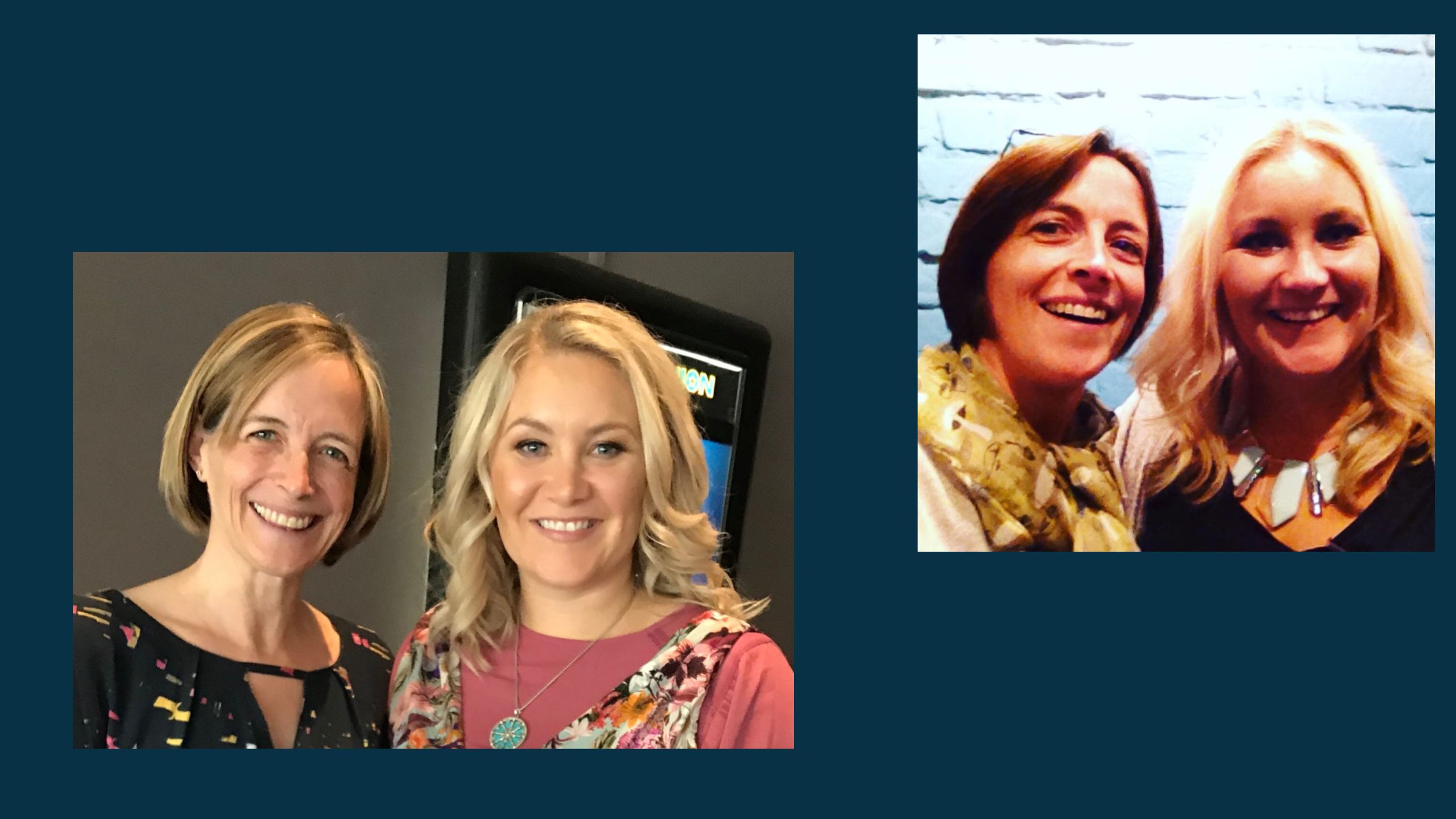
And she has taught me something else that had nothing to do with money mindset or business at all. She made a hefty donation to the charity project I run in Nepal. A distant mentor, who owed me precisely nothing, chose to be so generous. It showed me a lesson I don't think I'd have learned as clearly any other way: being successful isn't only about what it does for you. It's what it lets you do for others. Success gives you the means to be impactful in all sorts of directions you couldn't reach before. That's stuck with me as much as anything in her books, podcasts or training videos.
4. Speed - plain and simple. I have made decisions in an afternoon that would otherwise have taken me a year of trial and error, because someone I've never met had already made the mistake, learned from it, and generously handed me the lesson. That's time I got back. Time, I spent on my business, and my life, instead of on a wall I didn't need to climb.
None of this cost me a penny. Well, apart from Denise's membership, which has been worth every one. But the point stands: the vast majority of this exposure to these people and their thinking, changed how I think, how I work and most importantly what I believe, and it cost me nothing at all.
That's the case I want to make for distant mentors.
Keep them close - top tip
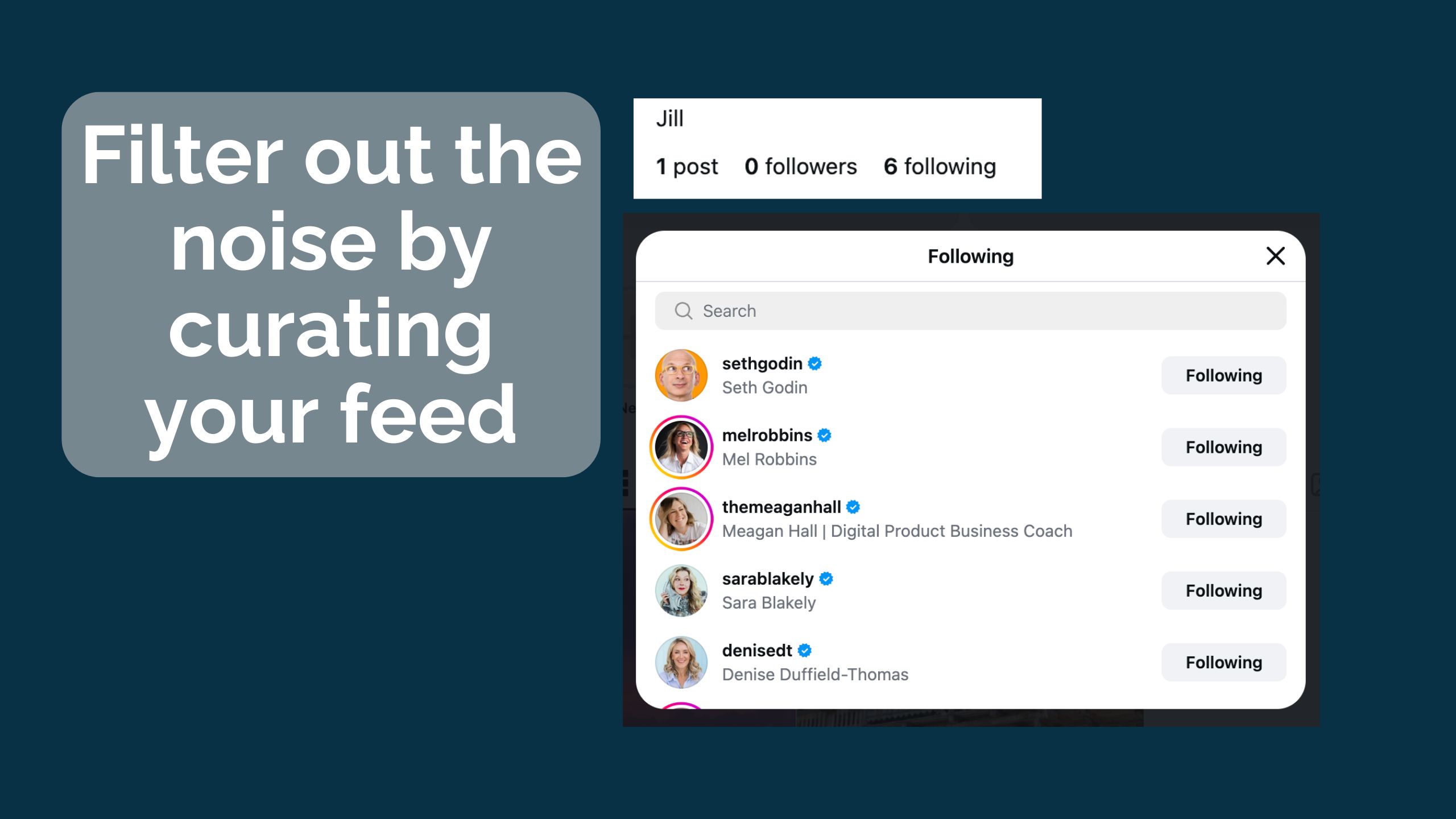
OK so let's make this practical - because I want you to start making progress not just understanding the principle.
The problem with distant mentors is noise. These brilliant people are on the same platforms as everyone else, and their genuinely useful thinking gets buried under adverts, arguments, and someone's chocolate brownie recipe - or is that just my feed?🙂.
So here's what I do. I have a separate Instagram account that I only ever use to listen. I never post to it. I follow only my handful of chosen mentors and a couple of others, and nobody else. That's it. It means when I open that account, I get their thinking and only their thinking, undiluted, instead of losing them in the chaos of a busy main feed.
It costs nothing, it takes ten minutes to set up, and it turns "I should really pay more attention to the people who help me" into something that actually happens as often or as little as I like.
Before you wait for the cavalry . . .
You already know I don't think the cavalry is coming. (If you missed that one, it's here, and it's one of my favourites.)
But in your practice the cavalry isn't coming to rescue you either. Nobody's going to knock on the door and hand you the practice you want.
What is available to you, right now, for free, is a whole regiment of people who've gone ahead of you and left the path marked. You don't have to know them. They don't have to know you. You just have to choose them, keep them close, and watch/listen. Let them help you with their hard-earned knowledge and expertise, while you use that insight to help you towards becoming the practice owner you're working on being.
Pick yourself, bet on yourself - just don't do it alone.
Thank you soooo much for taking the time to stop by my healthcare marketing blog today. I really hope you found value in spending some time here today.
I’d be so grateful if you could spare me just another 5 minutes to share your thoughts or questions in the box at the end of this page. What are you going to do differently now in your private practice?
Oh, and please use the social share buttons if you think other people you know might benefit from seeing this.
Until next time.
Thank you
Jill Woods
Healthcare Marketing Specialist
Founder of Practice Momentum
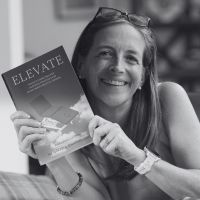
Jill Woods
Healthcare Marketing Specialist | Founder, Practice Momentum | Author of ELEVATE
I started Practice Momentum in 2010 after watching too many brilliant clinicians quietly burning out — not because they were bad at their jobs, but because nobody had ever taught them how to run or market a small business. Since then, I've helped hundreds of tiny practice owners around the world build practices that are professionally exciting, personally fulfilling, and financially rewarding. I'm the author of ELEVATE: Mindset, Marketing and Happiness Strategies for Allied Health Practice Owners, a podiatrist turned healthcare marketing specialist, a speaker, a nomadic military wife, and a self-confessed happiness junky. I believe tiny practices have the power to change healthcare globally - and I'm on a mission to help as many of them as possible thrive.
