
You Can Only Grow Your Practice as Much as You Grow Yourself

In this post:
- Why "just work harder" doesn't work for tiny practices
- The type of growth that actually transforms practices
- What personal growth looks like for practice owners
- Why this is the work most practice owners skip
- How to start growing yourself (not just your business)
Upfront honesty: I use AI to help me research and write my blog posts. I'm not going to pretend (like many) that I don't. It saves me time and means I can create more detailed, well-referenced content in much less time than my dyslexic brain on it's own would allow.
The result? I believe higher quality content delivered more efficiently - I hope you agree 👍🏼
I want to focus on something many business coaches won't tell you:
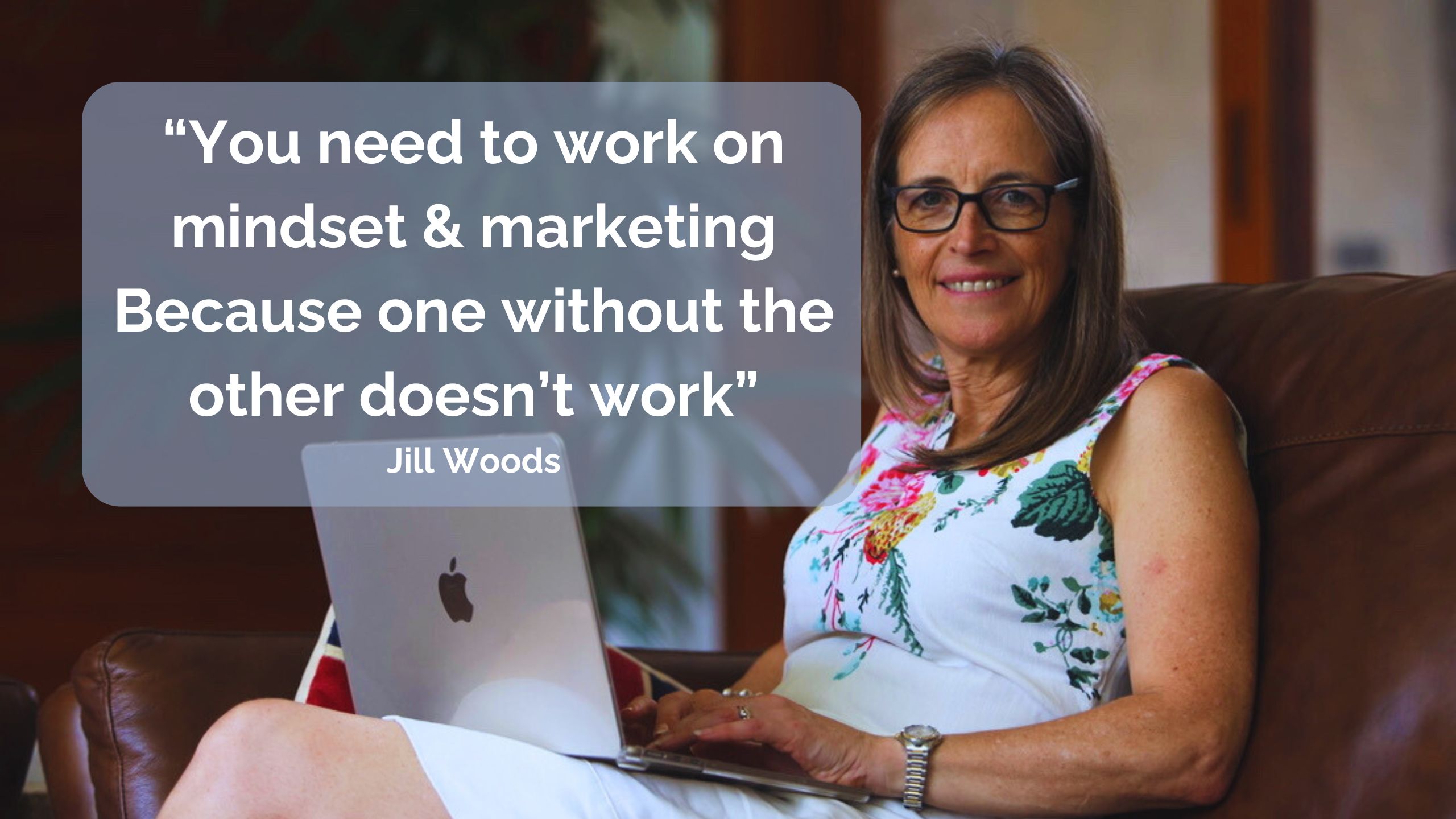
Developing your practice is not just about having the latest strategy, or using the latest marketing tool. If that is all you focus on and you still find yourself procrastinating and not getting things done it's because - You can only grow your practice as much as you grow yourself.
I know. It sounds like one of those woo-woo mantras that belongs on an Instagram quote graphic with a sunset background 😂.
But stick with me, because this is possibly the most important principle I've learned in 15 years of working with healthcare practitioners - and the one that most practice owners completely ignore.

Here's what usually happens when a practice owner wants different results:
Their diary has gaps. Their profit margins are thin. They're working flat out but barely making ends meet. They feel stuck.
So they decide: "I need to work harder."
More hours. More patients. More services. More marketing (squeezed in at 10 PM after they've finally finished their notes). More, more, more.
And you know what happens?
They burn out. Their relationships suffer. Their health declines. And their practice? Still stuck. Just with an exhausted, resentful owner now.
Because the problem was never lack of effort.
The problem is they're trying to create different results with the same level of thinking, the same habits, the same limitations, the same fears that created their current situation.
"You cannot solve a problem with the same thinking that created it." (Thanks, Einstein. Still true.)
The growth that actually matters
OK let's talk about what actually transforms tiny practices.
Most people hear "business growth" and immediately think: more locations, more staff, bigger turnover, "scaling up."
But here's what I've seen work for 100's of tiny practice owners:
The growth that transforms tiny practices isn't adding large numbers of team members and locations. It's growing as a person, growing as a leader of your business, and growing how you deliver your service.
This might sound frustratingly vague, so let me get specific.

Personal growth for practice owners isn't about reading more self-help books or doing morning affirmations (though those can help).
It's about developing the internal capacity to handle what your practice needs from you.
1. Developing confidence in your value
The limitation: You undercharge because you feel guilty asking for "too much." You discount at the first hint of hesitation. You apologise when giving your prices. You compare yourself to other practitioners and always come up short.
The growth: Building genuine confidence in your expertise and the transformation you provide. Learning to charge what you're worth without guilt or apology. Understanding that undercharging doesn't serve your patients - it just ensures you'll burn out and won't be there for them long-term.
What this requires: Examining your beliefs about money, worth, and value. Unpacking where those beliefs came from. Actively replacing them with new beliefs using evidence from your actual patient outcomes, or business achievements.
The result: You charge appropriately, attract patients who value your work, and have the financial stability to build a sustainable practice.
2. Building marketing confidence
The limitation: Marketing feels "icky and salesy." You hide behind "I'm just not good at this stuff." You start things and abandon them after two weeks. You know what you should be doing but somehow never do it consistently.
The growth: Reframing marketing as service (helping people find the help they need). Developing the confidence to be visible even when it's uncomfortable. Building consistency even when you don't feel "ready."
What this requires: Addressing imposter syndrome head-on. Unpacking why visibility feels dangerous. Learning that consistency matters more than perfection - and putting that into practice.
The result: You show up regularly, attract the right patients, and build momentum instead of stopping and starting every few weeks.
3. Learning to set boundaries
The limitation: You say yes to everything and everyone. You work evenings and weekends because patients "need you." You check messages at all hours. You give free advice constantly. You're exhausted and resentful.
The growth: Understanding that boundaries aren't selfish - they're essential. Learning to say no. Protecting your time and energy. Creating systems that respect both you and your patients.
What this requires: Examining your beliefs about being "helpful" and "nice." Learning that setting boundaries actually allows you to give better care. Practising saying no without guilt.
The result: You have energy for your work, your family, your life. You're a better practitioner because you're not burnt out. Your patients get the best version of you.
For more help with boundaries take a look at this blog post - 6 Boundaries Every Health Practitioner Should Set in their Practice
Are you starting to get the picture? One feeds the other - feeds the other !

4. Developing leadership skills
The limitation: You avoid difficult conversations. You don't delegate because "it's easier to just do it myself." You micromanage your team (if you have one). You react to problems instead of preventing them.
The growth: Learning to lead your practice intentionally - even if you're a solo practitioner (you're still leading yourself and your patients). Making decisions from strategy, not fear. Having difficult conversations. Creating systems instead of constantly firefighting.
What this requires: Learning business skills you probably didn't get in healthcare training. Developing emotional intelligence. Getting comfortable with being uncomfortable.
The result: Your practice runs smoothly. You make decisions confidently. Problems get solved before they become crises.
5. Overcoming limiting beliefs
The limitation: "I'm not good at business." "I'm just not a marketing person." "I can't charge that much in my area." "Successful practices have something I don't have." "I'm too old/young/new/whatever to..."
The growth: Identifying these beliefs for what they are - just stories, not facts. Examining the evidence (or lack thereof). Actively choosing new, more empowering beliefs.
What this requires: Self-awareness. Willingness to question long-held assumptions. Building new neural pathways through consistent practice of different thinking.
If this feels like you, you should take our free Is it Me? Quiz to shed light on the areas of your beliefs that need some work.
The result: You stop sabotaging yourself. You take action on opportunities instead of immediately finding reasons why they won't work for you.
6. Building emotional resilience
The limitation: A negative review devastates you for days. A patient not rebooking feels like personal rejection. Quiet periods trigger panic. You take everything personally.
The growth: Developing the emotional capacity to handle the normal ups and downs of running a practice without spiralling. Learning to separate your worth from your business results. Building resilience.
What this requires: Practice feeling uncomfortable emotions without reacting. Learning to observe your thoughts instead of believing all of them. Building perspective.
The result: You make better decisions because you're not operating from panic. You recover faster from setbacks. You enjoy running your practice more.
Why most practice owners skip this work

Here's the real truth: Personal growth is the work that 99% of practice owners are not doing at all.
Why?
BECAUSE IT'S HARD !!
It's uncomfortable. It's much easier to buy another marketing course than to examine why you're not implementing the strategies you already know.
It's not tangible. You can't see confidence or resilience growing like you can see follower counts or diary bookings. So it feels less "productive."
It feels indulgent. You're busy. You've got patients to see, notes to write, marketing to do, admin to catch up on. Working on yourself feels like a luxury you can't afford.
Nobody really talks about it. Most healthcare business coaches sell you tactics and strategies. They don't talk about the internal work required to actually implement those strategies consistently.
But here's what I know from 15 years of working with practice owners:
The ones who transform their practices are the ones who have invested in their own growth as well.
Not just business knowledge. Not just marketing tactics.
Personal growth is the secret sauce of business success.
“80% of success in business is psychology (your mindset and emotions), and 20% is the mechanics/strategy.”
Tony Robins

The proof is in the pudding
Let me show you what this looks like in practice:
Practice owner A and practice owner B both learn the same Instagram strategy.
Practice Owner A has worked on their confidence and imposter syndrome. They understand their value. They've reframed marketing as service. They've built consistency habits.
Result: They implement the strategy. They show up regularly. They're visible and consistent. They attract ideal patients. Their diary fills.
Practice Owner B hasn't worked on any of those things. They've just collected strategies.
Result: They post twice, feel uncomfortable, worry what people will think, stop posting. Three months later they buy another marketing tactics training hoping this one will be different. Their diary still has gaps.
Same strategy. Completely different results. The difference? Addressing their personal growth potholes. Can you see that?

So what does this look like practically?
1. Acknowledge that this is the work
Stop treating personal development as something separate from building your practice. Your limiting beliefs, your confidence issues, your boundary problems - these ARE your business strategy issues.
2. Identify your specific growth areas
Where are you actually stuck? Not where do you need "better marketing" - where do you need to grow as a person to implement better marketing?
Some questions to consider:
- What would I do differently if I was confident?
- What boundaries do I need that I'm not setting?
- What beliefs are holding me back?
- What skills am I avoiding learning because I've decided "I'm just not that kind of person"?
- What uncomfortable emotions am I avoiding by staying busy?
3. Work on growth and tactics simultaneously
Don't wait until you "feel ready" to start marketing. Work on your confidence WHILE implementing marketing strategies. Build your boundaries WHILE growing your practice. Address your money mindset WHILE learning pricing strategy.
Personal growth and business building aren't sequential. They happen together.
4. Get support
You cannot see your own blind spots. You cannot objectively identify your own limiting beliefs. You cannot coach yourself through your own resistance.
Get support - whether that's coaching, a peer group of other practice owners, courses that address mindset alongside tactics, whatever works for you.
5. Measure your growth, not just your results
Yes, track your business metrics (diary bookings, income, new patients, etc.). But also track your growth:
- Did I show up consistently even when it felt uncomfortable?
- Did I set a boundary I would have avoided before?
- Did I charge appropriately without discounting?
- Did I have a difficult conversation instead of avoiding it?
- Did I post on social media despite feeling nervous?
These are the leading indicators of business success. Celebrate them.
The Practice Momentum approach
This is why every single area of the Practice Momentum Framework starts with mindset foundation work, and why we talk about it in all of the modules inside our Thrivers Rehab Programme.
In the Clarity module, we don't just teach you how to define your niche - we address why you're avoiding choosing one.
In the Numbers module, we don't just teach pricing strategy - we unpack your beliefs about money and worth.
In the Presence module, we don't just teach marketing tactics - we address why you're hiding.
Because we know from experience: you won't consistently implement the tactics we teach if you haven't done the personal growth work to support them.
What this means for tiny practices
Here's something specific to tiny practices:
You don't have the buffer of a big team or multiple locations to absorb your limitations.
If you're struggling with confidence, it shows up directly in your patient interactions and your pricing.
If you're avoiding difficult conversations, problems don't get resolved - they get worse.
If you haven't built resilience, every setback feels like a crisis.
If you haven't learned to set boundaries, you burn out.
Your personal limitations become your practice limitations. Immediately. Directly.
But here's the flip side:
Your personal growth becomes your practice growth. Immediately. Directly.
When you develop confidence, your practice reflects that confidence.
When you build resilience, your practice becomes more stable.
When you set boundaries, your practice becomes more sustainable.
When you overcome limiting beliefs, your practice expands.
You are the ceiling of your practice growth.
The bottom line
You can collect all the marketing strategies in the world.
You can learn every business tactic.
You can buy every course and attend every webinar.
But if you haven't grown as a person - developed the confidence, the resilience, the leadership skills, the emotional capacity - you won't implement any of it consistently.
You can only grow your practice as much as you grow yourself.
This is why some practitioners build thriving practices while others with the same knowledge stay stuck.
It's not the strategies. It's the personal growth that allows you to implement the strategies.
So stop looking for the next perfect strategy. Start working on growing yourself.
That's the work that actually transforms practices.
Ready to Start?
Take our Is it Me? Quiz to identify exactly where your personal limitations are holding your practice back.
Or join the Practice Momentum Academy (It's free !) to start working on both personal growth AND practical strategies together.
OR go all in and do both 🎉 - Because your practice can only grow as much as you do.
[Take the Free Is it Me Quiz HERE→]
Thank you soooo much for taking the time to stop by my healthcare marketing blog today. I really hope you found value in spending some time here today.
I’d be so grateful if you could spare me just another 5 minutes to share your thoughts or questions in the box at the end of this page. What are you going to do differently now in your private practice?
Oh, and please use the social share buttons if you think other people you know might benefit from seeing this.
Until next time.
Thank you
Jill Woods
Healthcare Marketing Specialist
Founder of Practice Momentum
Want to explore the other principles that guide my work? Check out Jill's Philosophy on Happiness
